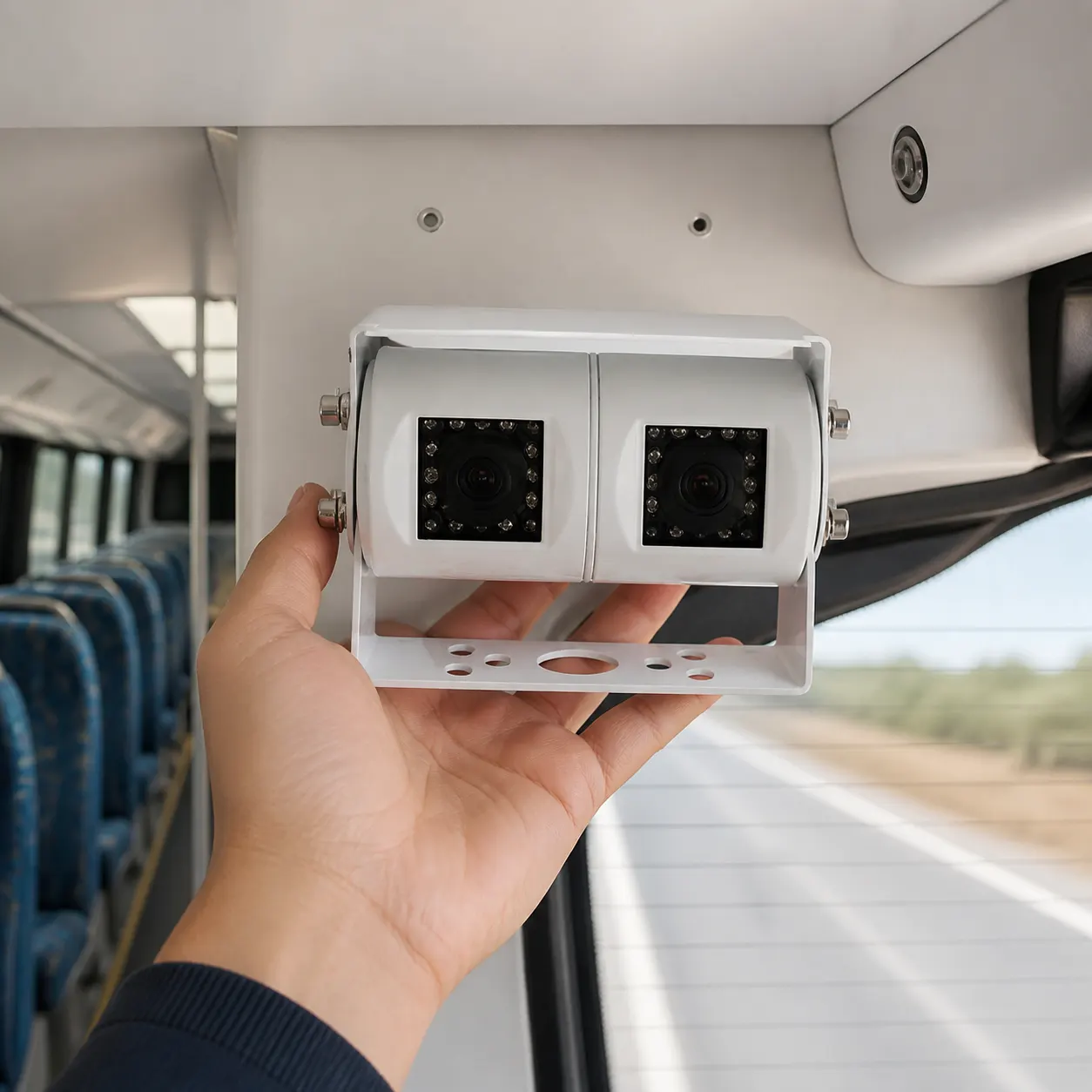
Short answer: A rear-view camera for a truck should be selected by matching the vehicle, cab display and installation plan, not by assuming that a camera body is a complete safety upgrade. The Dolphinaut PZ470-2 is listed as a white dual-head vehicle AV camera with 24V power voltage and 720 x 504 resolution. That gives a workshop useful starting facts. It does not confirm a monitor, cable kit, waterproof performance, night vision, certification, recording or suitability for a particular truck. Treat the product as a component for installer review and keep the Highway Code and site procedure in charge of the manoeuvre.
Start with the truck in front of you
Truck layouts vary by body, rear doors, tail lift, chassis equipment, cab display and existing wiring. A search phrase such as rear-view camera for truck describes a job, not a universal fit. Before comparing listings, record what the vehicle already has and whether the intended use is a loading bay, depot route, workshop manoeuvre or another controlled setting.
A component that works with one cab display may be unsuitable for another. The product page does not name a truck model, monitor, connector, cable length or installation method. That means the correct first step is a compatibility note for the exact vehicle, followed by installer confirmation.
- Write down the truck model, body layout and intended reversing locations.
- Photograph or record the existing monitor input and camera wiring without disturbing the installation.
- Confirm the vehicle supply and the proposed camera power arrangement with a qualified installer.
- Identify the mounting surface, cable route and any obstruction around doors or service panels.
Use the PZ470-2 facts carefully
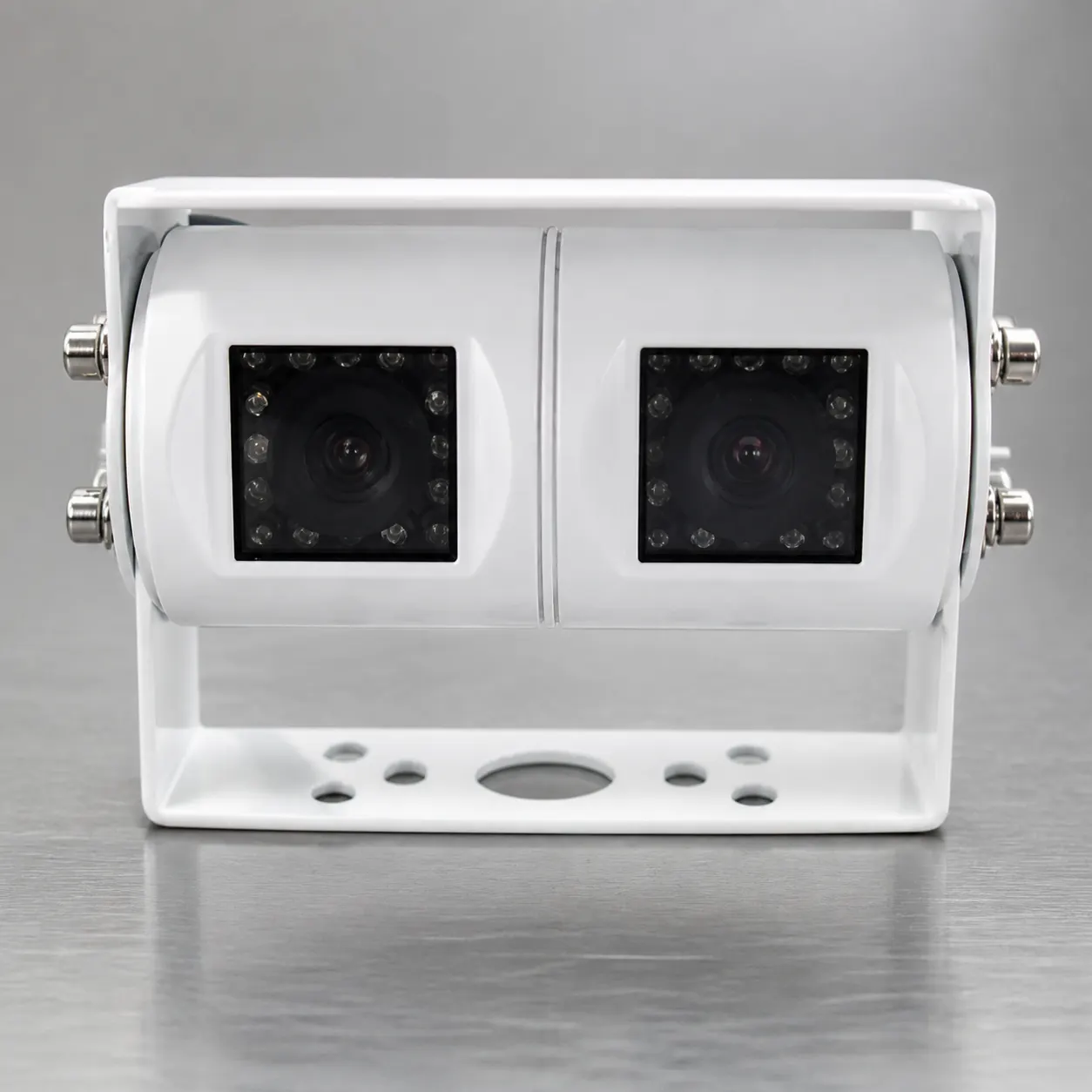
The product page names a White Dual-Head Vehicle AV Camera, PZ470-2. It lists AV video signal, 24V power voltage and 720 x 504 resolution. Those details can be compared with the truck's display and electrical plan. The resolution is a listed image specification, not a promise about visibility in every weather, lighting or loading-bay condition.
The manufacturer does not specify waterproof performance, night vision, certification, cable length, monitor inclusion, recording, sensors, alarm functions, mounting hardware or final vehicle compatibility. A truck buyer should leave each item open until it is documented. Do not use a similar product or a photograph to complete the specification.
| Item to confirm | PZ470-2 page | Truck-side question |
|---|---|---|
| Video | AV signal listed | Does the existing or planned monitor accept that signal? |
| Power | 24V listed | Has the installer confirmed the vehicle supply and wiring method? |
| Image | 720 x 504 listed | Is that sufficient for the intended parking feed and viewing position? |
| System scope | Camera component described | Are monitor, cable, trigger and other equipment already available? |
Keep reversing safety separate from product fit
The Highway Code says to use all mirrors, check the blind spot and check for pedestrians, cyclists, other road users and obstructions before reversing. It says to reverse slowly while checking all around and to get someone to guide the manoeuvre if the driver cannot see clearly. A screen does not change that boundary.
For a workplace truck, HSE guidance also points to route planning, separation of pedestrians and vehicles, suitable lighting, avoiding reversing where possible and appropriate reversing aids. Those are operational controls, not features that can be credited to the PZ470-2. The fleet operator remains responsible for the full site and driver arrangement.
- Use the camera as additional information within the approved procedure.
- Stop if the display is unavailable, dirty, blocked or inconsistent with the outside view.
- Keep pedestrians out of the manoeuvring area through the site's chosen controls.
- Use a trained guide when the required view cannot be obtained safely.
Know when the truck needs more than a camera
The PZ470-2 may be a reasonable shortlist item when a truck already has a compatible AV display and the installer can confirm the 24V route, mounting and trigger arrangement. It is not documented as a complete truck kit. If the vehicle has no monitor, no known input and no prepared cable path, a camera-only order may leave the workshop with an unfinished job.
Move to a fuller system or installer-led specification when the project requires multiple camera views, a supplied display, recording, sensors, audible warnings, formal certification, tender evidence or a named fleet scheme. The product page does not confirm those features, so they must not be inferred from the model name.
Related guides and product details
For a truck, buy the PZ470-2 only as a verified component in a defined installation. Confirm the cab, power and route with the installer, then keep the driver, site and Highway Code controls ahead of the camera. Read Truck Reversing Camera UK: A Pre-Fit Compatibility Guide for related guidance. Read Commercial Vehicle Reversing Camera Checks for UK Fleets for related guidance. Review the documented specification on the White Dual-Head Vehicle AV Camera, PZ470-2 product page before ordering.
Sources and safety context
- Supports the PZ470-2 product identity and listed AV, 24V and 720 x 504 attributes. Current Dolphinaut product page.
- Supports workplace transport controls including planning, pedestrian separation, lighting, avoiding reversing and suitable CCTV aids. HSE: Introduction to workplace transport safety.
- Supports all-round observation, slow reversing and using a guide where visibility is unclear. GOV.UK: The Highway Code, rules 200 to 203.